Electron Flow

Electron flow
Electrons are negatively charged, and so are attracted to the positive end of a battery and repelled by the negative end. So when the battery is hooked up to something that lets the electrons flow through it, they flow from negative to positive.
What causes electron flow?
Electromagnetism is the force which causes electron flow to occur, and it is the marriage of electricity and magnetism. This is because they are really the exact same force, which causes particles of opposing charges to be attracted to each other and those with matching charges to be repelled from one another.
What is electron flow and hole flow?
As the electrons move one way, from negative to positive, the holes move the other way, from positive to negative. You can think about current as the flow of electrons, which go from negative to positive, or as the flow of holes, which go the other way.
How does the flow of electrons work?
Electrons flow from the negative plate (negative electrode) to the positive plate (positive electrode). On their way, they strike neon atoms and knock electrons out of them. This creates more electrons to act as negative charge carriers.
What is flow of electrons called?
The correct option is D electric current. Electric current is the flow of negative charges called electrons.
Why current is opposite to electron flow?
The positive sign for current corresponds to the direction a positive charge would move. In metal wires, current is carried by negatively charged electrons, so the positive current arrow points in the opposite direction the electrons move.
What force causes electrons to flow?
This force is called electromotive force, EMF, or voltage (V). Sometimes it is convenient to think of EMF as electrical pressure. In other words, it is the force that makes electrons move in a certain direction within a conductor.
Do electrons actually move?
Electrons actually move very slowly through direct current (DC) electric circuits.
Are electrons always moving?
The frequency at which the electron wavefunction vibrates is directly proportional to the total energy of the electron. Electrons in higher-energy atomic states vibrate more quickly. Because an electron is a quantum object with wave-like properties, it must always be vibrating at some frequency.
Is electron flow a theory?
One theory is termed the electron flow theory and states that since electrons are negative particles, current flows from the most negative point in the circuit to the most positive. The electron flow theory is the more commonly accepted as being correct.
What are the two theories of electron flow?
“Early on in class it was explained that there are two theories for current: conventional theory and electron theory. Conventional theory is the original belief that electricity flows from the positive side to the negative side of a battery.
What is hole flow?
Even though an electron has moved from one covalent bond to another, the most important thing to remember is that the hole is also moving. Therefore, since this process of conduction resembles the movement of holes rather than electrons, it is termed hole flow (short for hole current flow or conduction by holes).
How do electrons carry energy?
When a current flows in a circuit, due to the presence of the battery this energy is transferred by electrons as electrical potential energy. It then flows through the circuit, being transformed to other forms of energy such as thermal, kinetic, sound and light energy.
How do electrons move from atom to atom?
Sometimes, the electrons in an atom's outermost shells do not have a strong force of attraction to the protons. These electrons can be pushed out of their orbits. Applying a force can make them shift from one atom to another. These shifting electrons are electricity.
What happens when electrons move?
An electron in an excited state can release energy and 'fall' to a lower state. When it does, the electron releases a photon of electromagnetic energy. The energy contained in that photon corresponds to the difference between the two states the electron moves between.
Why do electrons flow in the first place?
Answer: Because they are Charged and by nature , other charges can either attract it repel them , that is, exert a force on them. Similarly any charged particle can attract or repel the electron, depending on whether it is a negative charge or a positive charge.
What is flow of protons called?
Flow of protons constitutes electric current.
Which way does current flow?
The direction of an electric current is by convention the direction in which a positive charge would move. Thus, the current in the external circuit is directed away from the positive terminal and toward the negative terminal of the battery. Electrons would actually move through the wires in the opposite direction.
Do electrons flow through a wire?
Electrons move through a wire from the negative end to the positive end. The resistor uses the energy of the electrons around the wire and slows down the flow of electrons. A battery is one way to generate electric current. Inside the battery, chemical reactions take place.
Which way do electrons flow in a circuit?
Electrons flow from the negative terminal through the conductor to the positive terminal. They are repelled by the negative terminal and attracted by the positive terminal. Electric current was discovered before physicists knew about free electrons.
14 Electron flow Images
Electron Transport Chain ETC Components and Steps Electron

What is electricity What is electricity General knowledge

Which Way Does Current Really Flow Electronic schematics

batterydiagrams Remember electrons flow from negative terminal to

Gary Drostle Electron Flow

Figure 1922 Pathway of Electron Flow From H2O to NADP in
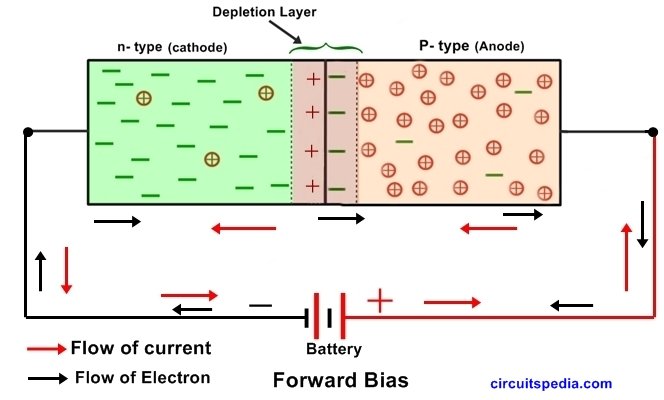
Semiconductor PN Junction Diode Working PN diode VI characteristics

Overview of the major steps of Cellular Respiration Glycolysis Krebs

What Is the Aufbau Principle Chemistry classroom Chemistry lessons

Khan Academy Oxidative phosphorylation Electron transport chain Biology

Electric current concept example vector illustration electrical

Cyclic electron flow

Regiochemistry of the f Diels Alder reactiob Predict the major

Post a Comment for "Electron Flow"