How Rom Works
How rom works
Read-Only Memory (ROM) is storage technology that permanently stores data in a chip built into computers and other electronic devices. ROM includes the most basic programming needed to start a computer, often referred to as Basic Input/Output System (BIOS).
How is data stored in ROM?
So, it is a non-volatile memory as it holds the information even when the power is turned off, or you shut down your computer. The information is added to a RAM in the form of bits by a process known as programming the ROM as bits are stored in the hardware configuration of the device.
How does RAM and ROM work?
RAM, which stands for random access memory, and ROM, which stands for read-only memory, are both present in your computer. RAM is volatile memory that temporarily stores the files you are working on. ROM is non-volatile memory that permanently stores instructions for your computer.
Where the data is stored in ROM?
Read-Only Memory (ROM) is the primary memory unit of any computer system along with the Random Access Memory (RAM), but unlike RAM, in ROM, the binary information is stored permanently . Now, this information to be stored is provided by the designer and is then stored inside the ROM .
What are properties of ROM?
Features of ROM (Read-Only Memory):
- ROM is a non-volatile memory.
- Information stored in ROM is permanent.
- Information and programs stored on it, we can only read.
- Information and programs are stored on ROM in binary format.
- It is used in the start-up process of the computer.
Can ROM store data without power?
The entire point of ROM is that the contents do not change, not even when the power supply is interrupted. So your ROM will be just fine after a power failure. Note however that modern applications use mostly programmable non-volatile memory (NVRAM) such as flash or phase-change memory instead of "true" ROM.
Is ROM a memory or storage?
ROM is memory that cannot be changed by a program or user. ROM retains its memory even after the computer is turned off. For example, ROM stores the instructions for the computer to start up when it is turned on again.
Can ROM permanently store data?
ROM is non-volatile memory, which means the information is permanently stored on the chip.
Why RAM is faster than ROM?
In terms of storage read speeds, ROM does this at a rate of a few MBs/second, whereas the read speed of RAM is a few GBs/second. With faster data access/read speeds, RAM boosts the processing speed of the computer. RAM is also faster and easier to write to than ROM.
How does RAM work?
RAM is a form of temporary storage that gets wiped when you turn your computer off. RAM offers lightning-fast data access, which makes it ideal for the processes, apps, and programs your computer is actively working on, such as the data needed to surf the internet through your web browser.
What is 64 GB ROM?
A: 4 GB ram is internal memory for processing and storing active application data 64 gb ROM is also internal memory but it's used for storage. So when you have 30 active application being used uses 4 GB processor memory and 55 application installed and 5000 songs for entertainment uses 64 gb ROM.
What are the 4 types of ROM?
ROM is further classified into four types- MROM, PROM, EPROM, and EEPROM.
What is ROM in simple words?
ROM is an acronym for Read-Only Memory. It refers to computer memory chips containing permanent or semi-permanent data. Unlike RAM, ROM is non-volatile; even after you turn off your computer, the contents of ROM will remain. Almost every computer comes with a small amount of ROM containing the boot firmware.
What is ROM with example?
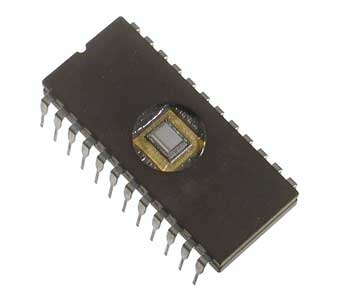
ROM is mostly used for firmware updates. A simple example of ROM is the cartridge used with video game consoles, which allows one system to run multiple games. Another example of ROM is EEPROM, which is a programmable ROM used for the computer BIOS, as shown in the picture below.
What is the capacity of ROM?
ROM chips often have a storage capacity of 4 to 8 MB. RAM chips often range in storage capacity from 1 to 256 GB. ROM can vary in size from less than an inch in length to multiple inches in length and width, depending on their use.
Is ROM permanent or temporary?
ROM—a read-only memory device Read-only memory (ROM) is used for retrieving stored data that are permanently fixed and cannot be rewritten. Many home appliances such as washing machines and rice cookers use ROM devices to store pre-set programs.
What is the main advantage of ROM?
The major advantage of ROM is its non-volatile nature, which helps it retain information even after you turn off the power or shut down the computer. ROM stores all the data necessary for your PC to start and load the operating system. It's a more reliable memory since all of its circuitry is very simple.
Can ROM be changed?
Because ROM is read-only, it cannot be changed; it is permanent and non-volatile, meaning it also holds its memory even when power is removed. By contrast, random access memory (RAM) is volatile; it is lost when power is removed.
What happens to ROM when power is off?
ROM (read only memory) is a flash memory chip that contains a small amount of non-volatile memory. Non-volatile means that its contents cannot be changed and it retains its memory after the computer is turned off.
What happens when ROM loses power?
It loses integrity after loss of power. RAM memory modules are installed into slots on the computer motherboard. Read-only memory (ROM) is nonvolatile: Data stored in ROM maintains integrity after loss of power. The basic input/output system (BIOS) firmware is stored in ROM.
11 How rom works Images
Neck Movement Human anatomy and physiology Human anatomy Anatomy

brooksidepressorg basicpatientcare wpcontent uploads 2015 04 MD0556
Pin by Kappa Jones on Storage Devices Gaming desktop Gaming laptops

Resultado de imagen de flexion extension wrist Physical therapy

Post a Comment for "How Rom Works"